
A State Rich in Potential, Held Back by Neglect
In the arid heartland of north-east Nigeria, Yobe State’s 3.4 million people have long depended on the land for their livelihoods. Recognizing this, successive administrations invested in a constellation of agro allied enterprises across the State, including oilseed crushing in Nguru, wheat and animal feed milling in Potiskum, fertilizer blending in Gujba, and a modern abattoir in Damaturu.
These were not vanity projects. They were built to keep value inside the State, to give farmers somewhere to sell their groundnuts, to put affordable fertilizer within reach of smallholders, and to create the kind of industrial jobs that keep young people rooted in their communities.
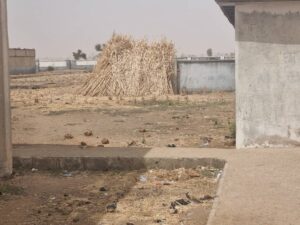
But years of underfunding, institutional drift, and the security crisis that has scarred the north-east have left most of these facilities idle. Machinery rusted. Supply chains collapsed. The communities that were meant to benefit most were instead left counting the cost, with higher input prices, fewer jobs, and raw commodities flowing out of the State with nothing coming back.
AP3’s Role: Structuring Transactions That Work
In early 2026, the Yobe State Agency for Public Private Partnership and Investment Promotion (YAPPPIP) brought in AP3 Advisory to focus not just on assessing these assets, but on structuring them into viable transactions that can attract investment and actually work in practice.
Given that many of the enterprises are largely dormant, the task is less about selling existing businesses and more about building new commercial propositions around them.
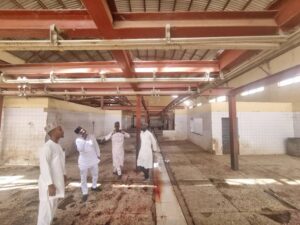
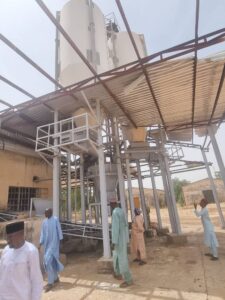
AP3 did not approach this as a desk exercise. The team travelled to Damaturu, Potiskum, and Nguru, walked the factory floors, interviewed the managers who had kept these operations alive on shoestring budgets, and assessed what it would genuinely take to bring each facility back to commercial life.
What This Means for Communities
The stakes are not abstract. A revitalized fertilizer blending plant in Gujba would mean that Yobe’s smallholder farmers no longer have to rely on expensive, centrally distributed inputs shipped from hundreds of kilometers away.
Restored flour and feed mills in Potiskum, the commercial engine of southern Yobe, would create direct factory employment and give livestock producers access to competitively priced animal feed, strengthening a pastoral economy that sustains entire communities.
Reactivating the oilseed processing line in Nguru would offer groundnut farmers, many of them women, a buyer on their doorstep rather than at the end of a long and exploitative supply chain.
And a properly structured abattoir concession in Damaturu could transform the safety, traceability, and profitability of Yobe’s livestock trade, reaching pastoralist families across the north-east.
Taken together, these are not incremental improvements. They represent a structural shift in how Yobe’s agricultural wealth is captured, processed, and distributed.
A Model for What Comes Next
Beyond the individual enterprises, AP3’s engagement is building something more durable: institutional capability.
By working hand in hand with YAPPPIP, strengthening the Agency’s capacity to prepare and oversee PPP transactions, and delivering a structured roadmap for investor engagement, AP3 is helping Yobe State establish a replicable approach to commercializing public assets that protects the State’s interests while unlocking private sector efficiency.
In a region too often defined by what has gone wrong, this is a story about what becomes possible when political commitment meets rigorous, independent advisory.
Author: Mubarak Abdullahi / Wuraola Onigbogi-Jackson